
Is "Disruptive Marketing" Still Relevant?
Somewhere around 2015, every marketing deck on Earth started using the word "disruptive." Disruptive packaging. Disruptive social strategy. Disruptive email subject lines (we've all clicked one against our better judgment). The term got so overused it started to mean nothing, which is ironic for a word whose entire job is to mean something new.
So here's the real question small and medium-sized brands should be asking in 2026: is disruptive marketing still worth the effort, or is it a buzzword that has disrupted itself into irrelevance?
What disruption actually means
Borrowed from Clayton Christensen's theory of disruptive innovation, the marketing version of the word isn't about being loud for the sake of being loud. It's about challenging an industry's assumptions of what a brand, product or campaign is supposed to look like.
Think the first direct-to-consumer mattress startups, or a kids' toy brand that skips the big-box shelf entirely and builds a following on unboxing videos instead. Real disruption solves a problem the category had stopped noticing, or helps break through to a new audience or new revenue or visibility numbers that may have stagnated
That's different from a shock-value stunt with no strategy behind it. And that difference is exactly where a lot of brands get into trouble.
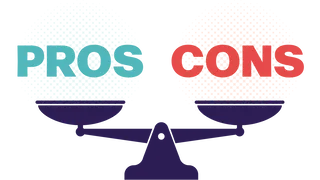
What are the pros and cons
We’re not here to tell you whether disruptive marketing is “good” or “bad.” That judgment depends on your brand, your customers, the market and a whole host of other factors that require detailed research. What we can tell you is that it works for some but not for others.
As a lawyer-owned marketing agency, we’ll present the evidence so you can make your own verdict.
The case against disruption
Consumers have gotten very good at tuning out marketing bullshit. A 2026 Gartner survey found 81% of consumers now actively try to tune out ads, treating most advertising as background noise at best and an annoyance at worst. Count that as more proof of the Great Attention Recession.
Trust is on shakier ground, too. According to the 2026 Edelman Trust Barometer, 86% of global consumers now refuse to buy from a brand they don't trust, up from 81% the year before. If your idea of "disruptive" reads as a gimmick, you're really only disrupting yourself. In fact, you're confirming everyone's worst suspicions about you, which is a great way to get your business news coverage for all the wrong reasons.
The case for disruption
It’s a Catch-22 situation, but the same reason why the Great Attention Recession has happened is exactly why, when done well, disruptive marketing strategies work. When the average brand is background noise, a genuinely surprising idea, a bold point of view or an unexpected campaign concept is what gets noticed—and talked about for free.
The trick is that disruption has to be earned, not manufactured. It has to come from real insight into your customer, your category or your community, not from a brainstorm where someone says "let's do something crazy" and nobody asks why.
What this means for your business
If you're competing against companies with 10 times your budget, disruption is sometimes the only lever you can pull to play on equal ground. You can't outspend a legacy competitor, but you can out-think, out-story and out-connect them.
Before you greenlight your next wild idea, run it through two filters:
- Does this actually serve our customer, or does it just serve our ego?
- Is this sustainable, or is it a one-hit stunt that burns trust we'll spend years rebuilding?
Remember, retaining an existing customer is far cheaper than acquiring a new one, so a disruptive campaign that alienates the customers you already have is a bad trade, even if it goes viral.
To disrupt or not to disrupt
Disruptive marketing isn’t dead, but the goalpost of what is “disruptive” has moved farther downfield. When executed with strategy, authenticity and a clear sense of who you are, it's still an effective strategy, especially for brands who've never had the luxury of blending in in the first place.
If you’re curious what disruption could look like for your brand, let's talk!
Written in collaboration with ChatGPT