Dynamic Brand Marks Make for More Expansive (and Scalable) Brands
For years, graphic designers and brand builders followed a golden rule: consistency reigns supreme. Same logo. Same layout. Same colors. Same lockup. Same everything. But some brands have started to shake up conventional wisdom, and we’re thrilled to see where we’re headed.
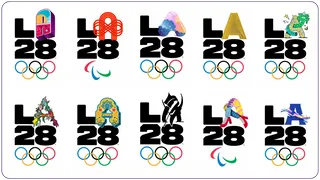
Allow us to introduce the “dynamic brand mark,” a logo system where one element is interchangeable while the core identity remains. Maybe we’re super impressionable to this trend because, as a Los Angeles-based marketing agency, we have our eyes on the LA28 Olympic logo, where the “A” continuously transforms from application to application. Each “A” was designed by a different artist to reflect the city’s diversity and “the city’s spirit of limitless possibility,” while the other elements remain consistent.
Before we dive in, let’s first be real: “dynamic brand mark” is not an official industry term—at least not yet. Branding leaders have also called these “responsive logos,” “modular brands,” “living identities” or “adaptive brand systems.” Us? We prefer “dynamic brand mark,” but we’re not married to the name. Whatever you call it, we just hope that the concept sticks.
What Is a Dynamic Brand Mark?
At its core, a dynamic brand is a logo with at least (and, hopefully, at most) one interchangeable element. Rather than treating the logo as a static image, dynamic brand mark designers see the logo as a symbolic system that can change as the business changes.
This can show up in multiple ways. Maybe the color changes seasonally. Maybe the icon gets swapped out based on the audience. Maybe the size or placement of the elements vary depending on the use case.
The key with a dynamic brand identity is to ensure the brand overall still feels cohesive, even when parts of it revolve. To be clear, building a dynamic logo is much more challenging than designing a traditional one, because the identity has to be so crystal clear that small shifts in the visuals have little to no impact on the brand or its relationship to its audience.
In a world where brands have to thrive across a dozen different channels all at once, the flexibility of a dynamic brand mark starts to make a lot of sense.
Will Dynamic Brand Marks Become the New “Thing?”
We interact with brands differently than we did ten, five or even two years ago. People expect content to feel alive, personalized, and culturally aware. A completely rigid logo system can come across as a museum exhibit rather than an interactive experience. Dynamic brand marks allow brands to:
- Respond to cultural moments
- Highlight collaborations or partnerships
- Adapt to new campaigns or audiences
- Encourage community participation
- Remain relevant without losing recognition
And perhaps most importantly, they create new opportunities for storytelling. LA28 is a perfect example. By inviting athletes, artists and creators to (re)interpret the “A,” the brand transformed its logo into an ongoing conversation.
What Are the Benefits of a Dynamic Brand Mark?
It may be harder to make a dynamic brand mark, but high risks can come with high rewards. The four most significant benefits to building an adaptive logo are:
1. Greater Flexibility
A dynamic system gives brands more creative freedom across platforms and campaigns. Social graphics, packaging, experiential activations and digital content can all evolve and feel more specific without being off-brand.
2. Expanded Utility
Traditional logos were designed primarily for print. Modern logos need to function everywhere, from TikTok thumbnails to smartwatch screens. Flexible identity systems adapt more naturally to varying formats and sizes.
3. Increased Engagement
When audiences see a brand evolve visually, it invites curiosity and participation. Dynamic marks can inspire collaboration, spotlight community creators or celebrate seasonal moments in ways static logos simply can’t.
4. Longer Lifespan
Rather than rebranding every few years, brands can evolve incrementally. A dynamic system allows for freshness without a full identity overhaul every time trends or the market shift—something your finance team can appreciate.
Why Flexibility Still Needs Structure
As with most marketing and branding strategies, this one comes with a caveat: there’s a fine line between “dynamic” and “chaotic.” A successful dynamic brand mark still requires strong foundational guidance: clear typography, recognizable structure, thoughtful design systems and strategic guardrails. Otherwise, the brand risks becoming inconsistent instead of adaptable.
What Is Most Important?
Dynamic brand marks may not be an official branding term yet, but the concept is increasingly shaping how modern brands look and behave online. As identities become more interactive, personalized, and platform-driven by necessity, flexibility is becoming just as critical as consistency.
The smartest brands won’t abandon recognition. They’ll build identities strong enough to evolve without losing themselves in the process.
Cody H. Owens,
Content Director
An interchangeable logo isn't the only thing that makes a brand dynamic. Check out our other posts about brand identities, graphic design and aesthetics:


EMBizVideoCover2025(1)_920x690.webp)